How to Paint a Masterpiece

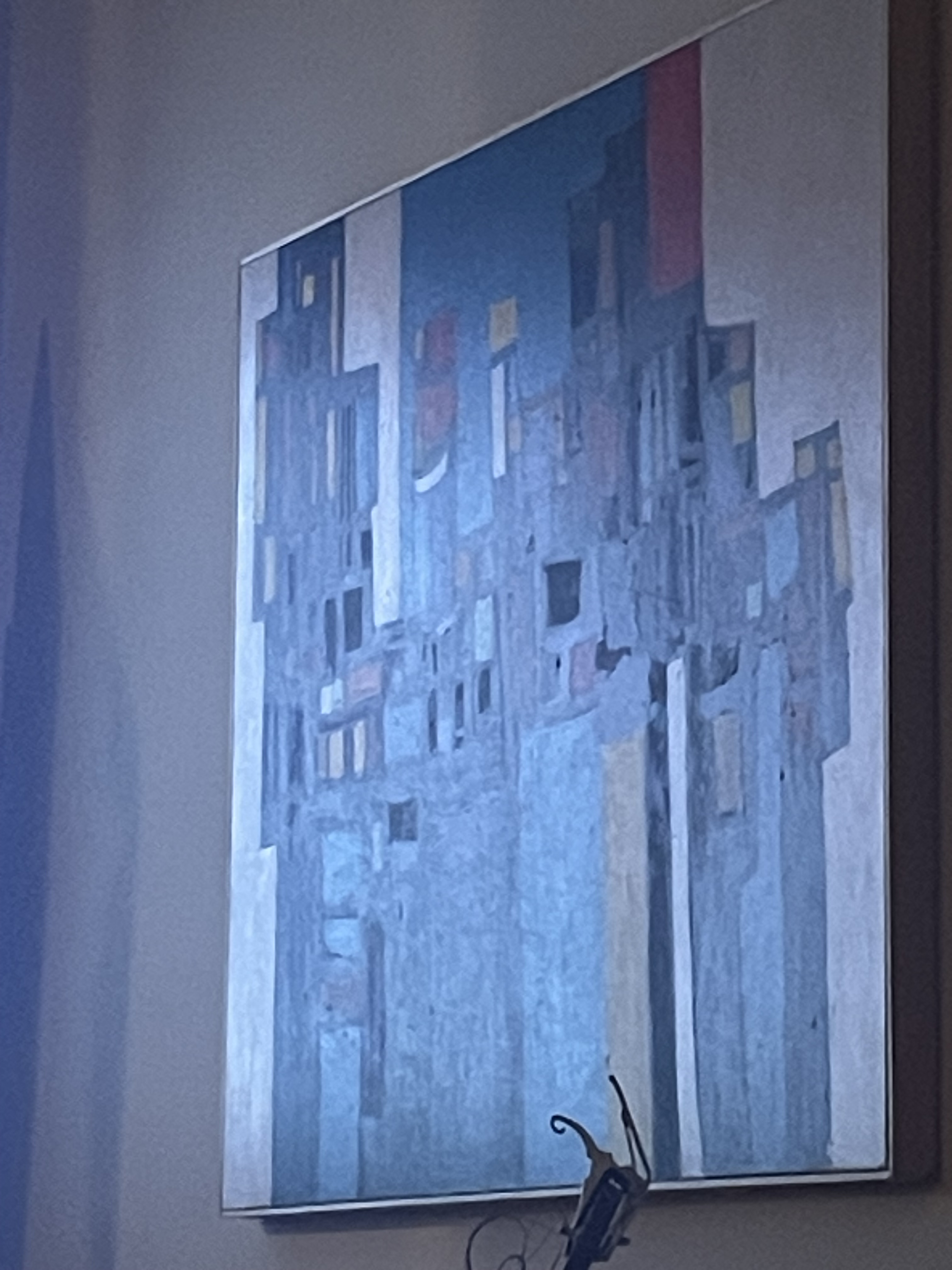
Turn the knob on the easel, easing the top ledge downward. Pause when it kisses the canvas. Adjust it one more millimeter and push the top left corner of the canvas to make sure it won’t budge. Stare at the whiteness and consider abstract art. Consider Jackson Pollock and formless splotches. Wipe your dry hands on your apron and glance at the mason jar of paintbrushes. Wonder which one to choose. 

Pick up the smallest paintbrush and run your fingers over the spindles. Press it against the canvas. Change your mind, put it back in the jar. Take a sip of your drink, also in a mason jar. It’s Jameson, neat, double. The last of your liquor. Think of driving to the store, but remember your car is almost out of gas. Swish the Jameson around in your mouth and smile as it sears down your throat. 

Choose the largest paintbrush, the footlong wooden one with no flecks of dried paint.

Coax out a glob from the tube of acrylic labeled “By the Ocean” and another from “Nairobi Dusk.” Mix them together with your brush. Frown as they turn each other to shit. Throw the paper plate pallet in the trash and try again, with a fresh plate. This time, line up all of your paints (ten of them, from the cheapest set at the art store) and squeeze a pea-sized portion of all of them onto the plate. Make sure they don’t mingle. 

Clean your brush in the third mason jar, the one filled with water, and watch as the liquid turns murky. Think of highschool science class and the word turbid. Return to the pallet and choose a shade of green. Paint one thick, slow, vertical line in the center of the canvas. 

Feel the emptiness of your apartment, decide to call it a studio. Just for this afternoon. 

Make an oval, also in green, and connect it to your line. Step back so that you can admire your work. It’s a plant, but you don’t feel like painting a plant so you fish the first paperplatepallet out of the trash and peel a lemon rind from it. Drop the rind in the garbage, mush your brush in the paint. 

Trace your plant with “By the Ocean” and “Nairobi Dusk” and watch it wither and die. Think: this is better. This is expression. Pick up your jar of Jameson and take a swig, except it is the murky paint water. Swallow it anyway and chase it with Jameson.

Crumple up your pallets. Leave the painting to dry. 

HeadShouldersKneesToes

Siena Ritter, 2023

Sophia’s legs tally marks across the photograph, disappearing when I lower my half-moon eyes. Her form is an abstraction; a stratus cloud stretched taught across the skeletal sky. I look away. 

The photograph is from 2007: the summer she stopped wearing shorts. 

For most of our childhood, I thought my little sister was a wild creature. She scaled oak trees and slept with the leaves still in her hair. When peach juice dripped from her chin, she wiped the sticky-sweet residue on my shirt, slinking away before I could retaliate. Her laugh was like water boiling over, frothy and vapid. I thought it was the sweetest sound. 

It’s the procession of nostalgia, growing in intensity as I age, that memorializes her laughter. Nostalgia has a way of illuminating exactly what the mind wishes to remember, exiling the rest to a nearly unreachable place. As it constructs Sophia’s wilderness into something vast and beautiful, it leaves behind the understory. 

The summer she stopped wearing shorts was also the summer she started measuring her circumferences. She was six years old, and her uniform until that point had invariably been jean shorts and a tank top. Her monkey-legs were free to swing from tree limbs in that outfit, though it didn’t offer much protection against the ground, and her knees were perpetually the color of ripe strawberries. It wasn’t until we were adults that she explained the sudden switch. It didn’t seem significant at the time– Sophia was headstrong and prone to bursts of stubbornness (My mother often called her Testadura, which in Italian means hard-head), so her sudden and vehement opposition to tight-fitting clothes didn’t warrant much attention. 

For the next five years, my sister’s shirts became larger and larger on her frame, and her pants drooped at the waist, encircling her legs in a column of khaki. She despised dresses and blue jeans and the concept of growing older. Though it wasn’t much, she was still eating in these in-between years; it was the fifth grade that marked a revolution, a new facet of my sister, la testadura. Suddenly, she refused to go to restaurants on account of all the germs. She refused to eat my mother’s cooking on account of its poor nutritional value. She refused to eat bread, then meat, then milk and cheese, until her diet was confined to tiny portions of fruits and vegetables. She was refusing sustenance, life. 

I watched her face go from cherub cheeks and skin the color of almonds to something angular, pallid, lifeless. Her body swelled at its joints and sunk everywhere else. I remember thinking she had taken on the image of a deflated balloon. Nobody noticed at first, then it became unavoidable. She was eleven years old and barely larger than a third grader, heads below everyone else and sunken beyond her years. My parents tried to revive her softly at first, but their kindness soon morphed into impatience and, eventually, anger. Though they were well aware of the issue, they refused to take her to treatment. I, too, was angry – the big sister kind of anger that blossoms under a pretense of concern, though it really has more to do with control. I didn’t understand why she wouldn’t just pick up a fork and get over it, move on with life, and accept that physical growth is an inevitability. I thought she was simply scared of getting older, and that her condition was reactive. It would be a long time before I understood the urge to disappear. 

Sophia never truly recovered. In high school, she took up running because she thought it would make her smaller. At first, it seemed like divine intervention; she fell in love with the sport and soon realized that to get faster, she would have to put more fuel into her body. The moment our parents observed her new volition to eat, they claimed she was cured and promptly forgot to check up on her again. Then, the culture and competition of cross country caused her to boomerang back into restriction. 

I’ve never written about this until now. A few months ago, Sophia and I were hiking in our hometown when I brought up the subject. I had been struggling with depression, and for the first time in my life, I had a turbulent relationship with food. Naturally, she was my confidant, though I didn’t expect much openness from her. I was astonished when she admitted that the reason she boycotted shorts at age six was because she thought her thighs were huge. She is not a vulnerable person by nature and had never spoken so candidly about this before. 

I have spent my whole life trying to fit into a smaller body, she said. It was the only way I felt in control of myself. 

Those two sentences sent me reeling. How could a child have such dysmorphic thoughts? I thought eating disorders were for teenage girls with braces and boy problems, not kindergarteners. But as soon as my sister learned how to count on both hands, she began to quantify herself. It’s a mathematical disease rooted in numericals: pant size, weight, circumference, and calories. Subtraction, subtraction, subtraction. A disease of deficits. Once you subscribe to this logarithmic landslide, it’s hard to find your way out. 

These are the things that went through my head when I looked at the photograph. It was one in a dust-covered box of hundreds, but I couldn’t bring myself to sift through the others. This picture, marked 2007 in orange, digital print, wasn’t of a carefree child hanging from a tree. It was an image of a girl under a great and invisible pressure, teetering on the precipice of collapse. This, I thought, is the condition of women everywhere: superficial standards propagated by male voices, burrowed deeply under our skin, all the way to our bones. Growing up is a constant search to reclaim childlike freedom, but how can we find this liberation if even our infancy is marred with expectation?

With the photograph in my hand, I imagined a world in which I was a mother, and in that moment, I made a promise to my unborn daughter. When – if – you come into this world, I promise to teach you how to treat yourself with love and only love. I promise to remind you that you are enough, always. I promise… 

All of the things I wish I could have promised to my sister. 

Sundays

Siena Ritter, 2023

Mother clutched my four-year-old fist in her own as we parted the congregation of Lincolnton Presbyterian Church, the only non-Baptist service in our small town. It was the second Sunday of October and she had chosen a vermillion cloche with a bow that matched her dress. Cream and Crimson, she had called it that morning, smacking her lipsticked lips in the mirror. She had plucked the hat from its wooden peg, one in her wall of hundreds. Every Sunday: a hat without hesitation, an effortlessly perfect accent to her dress. 

At church, she was the Hat Lady. Children would flock to her before service, touching the seams of her hats, and stooped elderly women would marvel at their vintage splendor. At Thanksgiving, she wore a suede flower-pot hat to which she had fastened turkey feathers. For New Year’s Eve, it was a sequined casque and silk gloves. My favorite, however, was Easter, when she would don a pastel bonnet with magnolia blooms, freshly picked from the tree in front of our house. The springtime fragrance would follow her through the service. 

Her procession of hats flourished for fifteen more years, until an especially hot August during which a doctor told her she was dying. By September her curls had thinned, and in October they disappeared altogether. 

I found her in the bathroom once, pinching the places where her cheeks used to be flushed and youthful. Upturned on the ground was one of her church hats, warped as if she had tried to tear it apart and failed. I bought her a periwinkle toboggan that winter, and she tugged it over her baldness like a shield. She slept in that hat, and clung listlessly to life in that hat. It stretched and matted as she shrunk beneath it. 

Easter came and went, and her bonnet held on to last year’s dried magnolias. 

A week later, she held my hand in hers and asked me to box up her hats. They’re only harboring dust, she said. And besides, you might want to wear them one day. 

So I pulled her boxes from the basement and placed each hat between tissue paper. I ran my fingers over the straw, the velvet, the wool, and tried not to acknowledge the growing emptiness of her wall. When I placed the last hat in its box, I could not bring myself to close the lid. Instead, I left the boxes open in her closet and shoved the lids beneath my bed. 

She died in her toboggan, and when the ambulance came, it slipped from her head. I scrambled to grab it, to soak in its perfume of sweat and wildflowers before it, too, disappeared. 

The funeral was on a Tuesday, and I packed her hats in the car beforehand– Seventy-three open boxes of every Sunday we had together. At the church, I laid them on folding tables just inside the front doors, with a note that read, The Hat Lady’s Marvelous Collection: Take one; help spread her joy. As people filed in, the pews filled with more and more vibrant hats. I adjusted her Easter bonnet on my head and smiled as mother’s radiance spread through the space she had left behind. 

Every Sunday after that, the congregation collected hat ladies, and every Sunday, my mother returned through her beloved ribbons and bows. 

How to Start (and Stay) Journaling

I have encountered many people over the years who mention the practice of journaling in some form of the comment, “I’ve always wanted to start, but I can never keep up with it.” Or my favorite, “I have so much to say in my head, but I wouldn’t know how to write it down.” These phrases are problematic because they establish a perceived failure before you’ve even picked up a pen. 

My response to these concerns is always a challenge. “You don’t have to ‘keep up’ with it. Sometimes I write multiple times a day, and sometimes it’s months between entries. The point is not measurable consistency, it’s using the journal as a tool when you need it.” And in response to the head-full/page-empty comment, “It’s not about perfection. In fact, part of the value is letting go of perfection. Allow the words to flow through you for a bit, and don’t read them back until you’ve gotten comfortable with the process.” 

These conversations have made it clear that there’s one main culprit keeping people away from their pens: fear. As a culture, we have cultivated a dynamic of radical self-love pitted against an intense fear of self-intimacy within the individual. It’s total focus on the self rather than total focus within the self. So, let’s spend a little time extinguishing our fear of what we’ll find within. Here are some things I’ve learned over the past 14 years of journaling. 

1. The Journal Matters

This is the most materialistic of my tips, so I’ll get it out of the way first. Above all, write on what’s accessible for you. My journals contain pages of taped-in notecards and napkins, all scribbled in the marginal minutes. Slow nights at work, waiting to board a plane – these moments, memorialized, show you more about yourself than you might expect. If you have the means, however, I would suggest a journal small enough to carry with you. I tend to like mine book-sized, unlined, with a medium-hardcover, which brings me to the next point. 

Invest in the journal that’s most comfortable for you. Consider line spacing, paper texture, the way it’s bound, how well it fits into your favorite bag. In my experience, creating a physically comfortable space in which to journal helps you write more openly from the get-go. It doesn’t matter if you’re into motivational quotes or handmade, leatherbound notebooks; rather than trying to fit an aesthetic, go with what feels most like you. 

2. Forget Format 

Dear Diary, 

Please don’t write a letter to your journal every day unless you’re absolutely stoked to do so. 

Sincerely, Siena 

Seriously though, you don’t have to write a book. In 2016 I filled an entire journal with nothing but disjointed bullet-point-poems. After I read the Bell Jar in 2019, I wrote like Sylvia Plath for about eighty pages until spring bloomed and my depression fell away. My sister’s journals used to catalog her stuffed animal collection, complete with names and color classifications. Now they’re filled with construction schematics for van builds and Earthships (she’s a cool gal). Though they’re not in traditional diary format, they tell her story just as well. The point is to fill the pages in a way that’s authentic to you. A ten-page rant is just as valid as a prayer, which is just as valid as a comic-book illustration of your day at work. The format doesn’t matter as long as you’re creating from a place of truth. 

3. Authenticity 

I recently listened to a Ted Talk in which the person speaking claimed that the state of consciousness which produces the highest vibrational energy is not love or gratitude, but authenticity. While the intrinsic worth of journaling is different for everyone, I enjoy it most as a mindfulness practice. Your journal is a safe space for you to discover yourself, so write from a place of truth and humility. There is no audience, so there is no need for affect. Observe the sentences in which you are trying to form an identity and consider their authenticity. When I was younger, I described myself in the same way Young Adult authors describe their angsty protagonists. These self-characterizations were only half true, and in failing to observe them with attempted objectivity, I was robbing myself of potential growth. Your journal is not the space to construct a self-image that makes you feel good, we have social media for that. It’s a space to understand, and come to love, the parts of yourself you don’t know as well. 

4. Forget the Perfectionism 

This point is woven through the aforementioned tips, but it’s worth its own feature. Don’t write for an audience, even if that audience is yourself. Write to evolve. Write to process and to understand. Write to create. Write to remember. But don’t do it for anyone else. The moment you invite external perception into your safe space is the moment it is no longer sacred. That said, your journal is an exceptional resource for creative projects. I use insights from mine all the time in my writing. Journaling for an audience is a less authentic intention than seeking inspiration from your journals to create for an audience. You need the freedom to fuck up on the page without consequence, and while I know you’re not writing your open mic poetry set after three martinis, you might write something you didn’t expect, and this something could be the foundation of your set. That’s how it works. Art is so beautiful when it comes from an organic place. 

So, write when you feel the smallest urge, or when you can’t make sense of the clutter in your brain. It’s valid and natural to go through ebbs and flows in this process, and it’s okay to put your journal down if it isn’t serving you in the moment. The important thing is that you pick it back up when you feel the pull rather than ignoring the impulse.

I hope at least one of these tips makes journaling a bit more accessible. There is so much growth encapsulated [and ongoing] in my journal pages, and I’m grateful for the space to share such a meaningful thing. 

Happy journaling ❤

Siena 

River Road

[Reflections on home]

The concept of “home” has always intrigued me. During the past month, I’ve experienced a brilliant collision of presence and home, and I’ve found that one catalyzes the other. Let me explain. 

In high school, I believed home was this allusive place. I called it Elsewhere. During college, home felt halfway between Chapel Hill and Boone until I met my best friends. It was then that I learned it could be transitory. It’s not a new idea– you’ve been familiar with the sappy phrase “you’re my home” since you started reading romance novels. In one way or another, the concept of a person being the embodiment of home has drifted through your head before. It might even feel more natural than walls and a roof. 

I want to start by saying I’ve never felt particularly comfortable in my human body, on this human-populated earth. I think this is the condition of the majority of us, especially women. Our physical form is never quite right; we could always be more. We’re anxious and depressed and hungry for anything that offers escape. Some of us are so uncomfortable here that we stop trying. We hibernate, isolate, and eventually leave the earth having never felt at home. If we can’t even find comfort within ourselves, how do we expect other people to fill the home-hole?

In short, I think we have it all wrong. It’s the human imperative to desire belonging– to fit in and be loved. This comes from a place of ego. We want to feel worthy of these things because we haven’t learned to generate self-worth internally. We want to fit in because we have yet to accept ourselves, because we want other people to do it for us. But what happens when you strip away external validation? Is there anything left?

Our problem, I believe, is that we have become too stuck in our perception of reality. Somewhere in-between the second and the fourth dimensions, where everything boils down to vibration, we forget the vastness of ourselves. We don’t see our light or our inherent value because we are too preoccupied with how other people perceive these things in us. It is fear that guards the entrance to our true home – the place of pure love. 

Recently I have experienced an abundance of gratitude. In a miraculous landslide of events, I found a job and a place to live that isn’t my parents’ basement. After months of mediation, prayer, manifestation, and faith, everything came together at once. I had been denied from hundreds of positions in various cities across the country and was becoming exhausted and impatient with the process. Then, this miracle occurred. Within a weekend, I had full-time employment and an incredible apartment within walking distance to work. It couldn’t be more perfect, and it wouldn’t have happened if I had not upheld my faith in the process. 

The radiant, loving energy I felt from the universe kept me buoyant and guided me forward, and in mirroring this energy, it was extended and amplified. Constructive interference is a term that refers to the event in which two waves [of light, sound, etc] combine to form a much larger, more powerful wave. I believe the same concept applies to energy and the way in which reality manifests; as we emit positive energy, it attracts like energy and results in constructive interference. The love you produce catalyzes more love in your life, and so on. As you begin to discover home within yourself, you emit a knowledge of belonging that eventually reverberates back. 

Truthfully, I didn’t expect to land in my hometown after graduation, but now I have no doubt that this is exactly where I am meant to be at this time. Every morning, I make coffee and open the windows and am overcome with a swell of gratitude for what is. 

If I wasn’t in my hometown at the moment – if I had failed to follow my intuition – I wouldn’t have been present through my mother’s recovery after major surgery. Now, I can drive her to rehab. As she heals, we pass the hours with Christmas movies and popcorn and art, and peace seals the space between us. If I wasn’t in my hometown, I also wouldn’t have reconnected with old friends. So many conversations have given me the exact strength I needed in the moment. Perhaps I wouldn’t be learning to love the cold, even when it pricks your lungs, frosting you from the inside. But I’m here. And I am discovering the beauty that comes from trusting something greater than yourself. 

It’s important to recognize that the difficult months had their own value. Relationships healed and fell apart. I learned so much about myself and others. I stopped trying to control the trajectory of my life, and more doors began to open. If I had stuck with my plan, I would be broke, lonely, and halfway across the country. Instead, I am learning that meeting the universe with love and trust, even through the difficult times, creates the space in your life for miracles. 

Still, I could tell you this town is my home, but that would be false. I would rather tell you that I’ve never felt so at home in my life, and it has very little to do with my physical location. 

Lately, when I meditate, warm honey spreads through my vascular system. It feels like a buzzing golden light, and it whispers, “I am home.” The “I” is not me, it comes from a place that isn’t my own mind. I often wonder if it is God or my soul, or if God and my soul and the “I am” that is Siena are all part of the same thing. I don’t even have a fraction of the answers. What I do know is that my conceptualization of “home” has shifted from something rooted in place and people to something of a much larger scale. I feel my own self expanding through the stratosphere. Every aspect of this self feels settled and peaceful, even though it’s not rooted in form or physical reality. 

It reminds me of the Miltonian idea in Paradise Lost that we all exist on a continuum of light. The detritus under your feet is connected to every form of life, and every form of life is connected to a higher energy. Milton calls this God. To me, the continuum only appears hierarchical because of a difference in vibrational energy from one level to the next. If we think of God as the height of loving energy, and thus our true home, then we also must learn to recognize God in all parts of the continuum. There is love in the fabric of our bones. 

This, I think, is the secret to feeling at home on earth. 

It’s not your family or romantic partner or childhood house. It’s an energy that exists within you, that you can harness at any time. It is the state of peace and love, and the recognition of these in other beings. It is the choice to see the home rather than the hell in all things. 

That includes yourself. Myself.

With love, 

Siena 

Small Frames

In June I had the pleasure of meeting a smell-the-roses type of human, which is more rare than you might think. 

“Smell the roses” is a hackneyed phrase that my highschool English teacher strongly discouraged, but I’ve found that we, as a collective, hear those words more frequently than we actually think about or implement them. Smell-the-roses people are an endangered group. Slowly, their phones and laptops and work and stress and relationships and impatience dilute their sense of joy. One day they wake up and no longer feel the sun’s warmth on their skin – they have joined the population I refer to as Distracted Human Beings. Everyone, in some capacity or another, is a member of this group. Unhappiness, unconsciousness, and anxiety are symptoms of existing here; it’s a sickness of sorts that has infected our work hard, play hard country. Eckhart Tolle refers to it as a pandemic. Deepak Chopra calls it the disease of unconscious thought patterns. For Jesus, it is the depraved world. 

Truthfully, it doesn’t matter what it’s called because we observe it every day, in others and in ourselves. I often think back to Alduous Huxley’s Brave New World, a dystopian work of fiction in which the entire country is addicted to sex and soma, a drug that pacifies thought. The characters go to their assigned jobs each morning, and when they’re not ants in the machine, they have grandiose orgies and overdose on drugs. 

How different are we now? Huxley situates the reality we are living every day within a seemingly bizarre environment. The government overbears. The people lose all agency. Mass destruction ensues. Resolution is irrelevant; hope is extinguished. Is this not the condition of our world today?

I get it though. It’s hard. These observations are about myself as well. It’s so comfortable to comply, to be placated by the roles we prescribe ourselves. When something becomes a constant in your daily intercourse, it’s difficult to reach outside of it. Take anxiety for example. While I am a well-traveled passenger on the depression train, lately my body has been full of bees. It’s a palpable, physical anxiety that hums in my chest when the sun goes down. I haven’t been able to escape my own head in weeks, which is long enough to settle into a sort of comfort with my body-bees. Though the anxiety is unpleasant, it’s become routine. 

It hurts my heart to think that this is the state of the world. We are voluntarily uncomfortable with our minds, bodies, jobs, relationships, etc, because we can’t imagine an alternative. We resist positive change because discomfort is far more familiar; we perpetuate this cycle of unhappiness while telling ourselves, “that’s just life.” 

Personally, I don’t think the word “just” should ever precede life in all of its multitudes. 

Anyway. Back to where this all began, with the smell-the-roses man. He is intelligent and beautiful and his name is Elijah and he doesn’t have it all figured out either, but he takes the time to see the art in the world. 

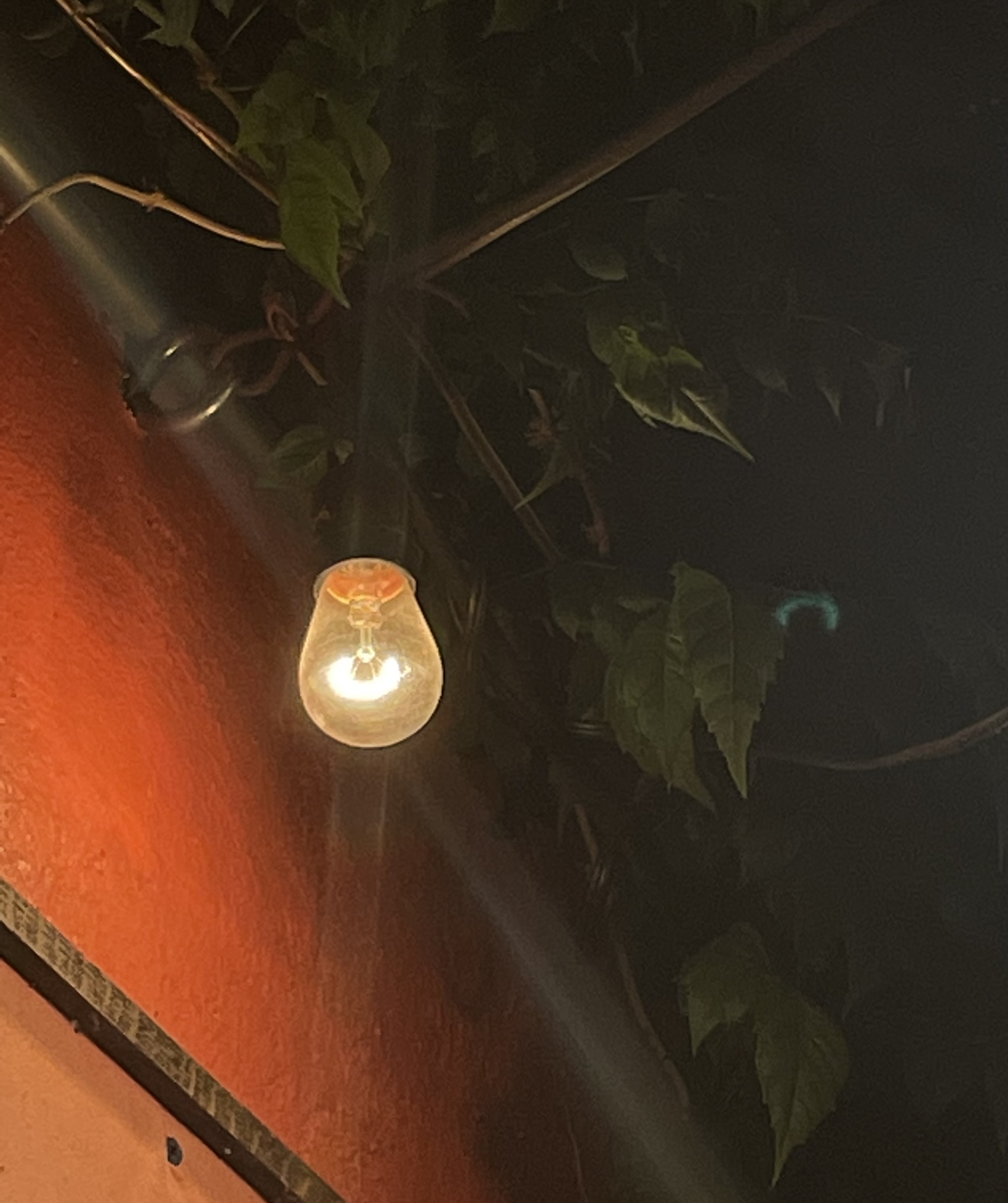
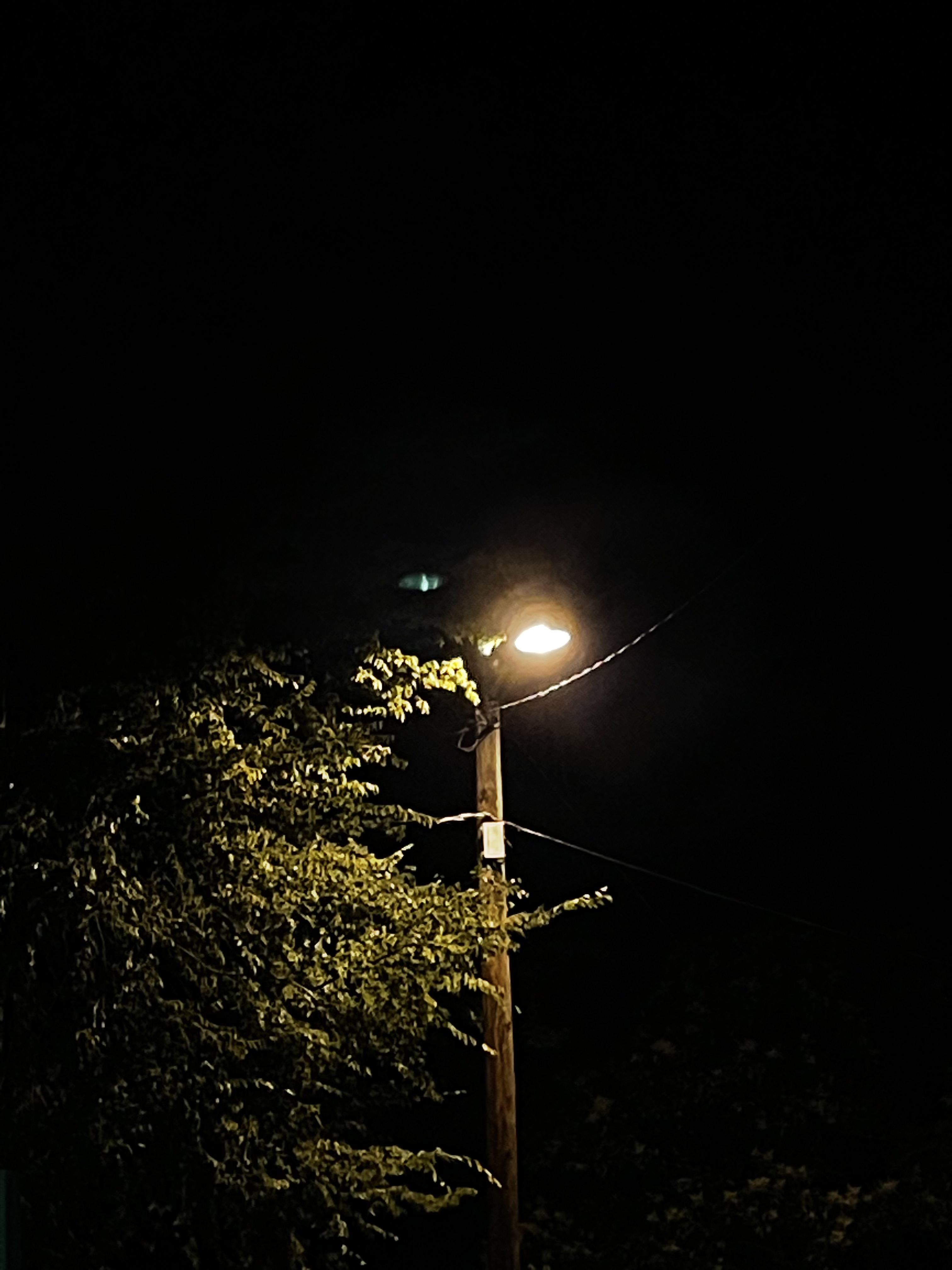
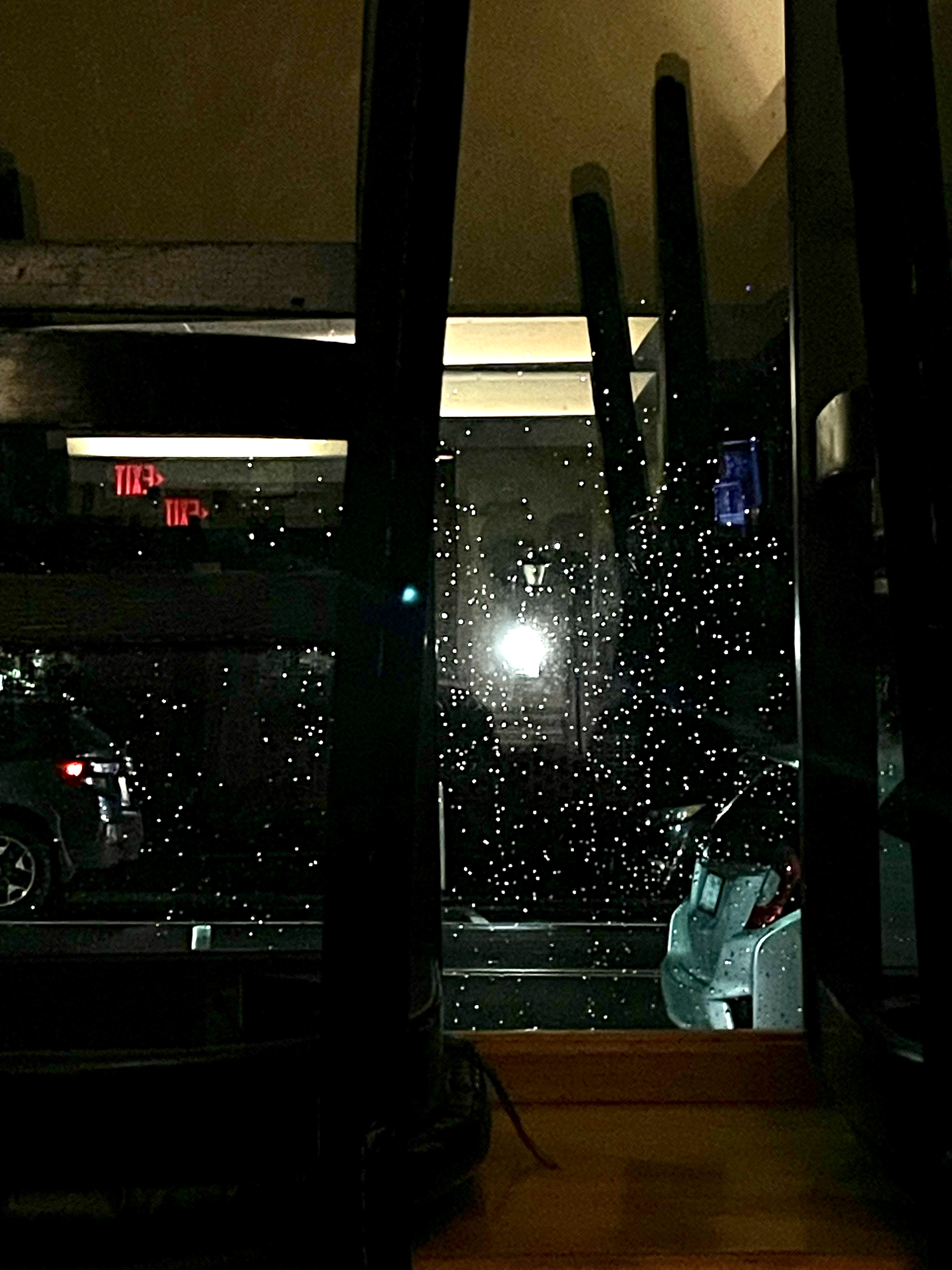
At first, I only knew this because I followed him on instagram for four long years before I met him. He posted catalogs of artful moments, small things like reflections in windows and the bugs that street lights collect. Though I was experiencing these moments secondhand and through a screen, there was something genuine about the pictures he shared. I wanted to meet this person who took time out of his day to appreciate the beauty in the mundane. I am invariably drawn to smell-the-roses people. While Destination Irrelevant is a new concept to me, I yearn to understand and embody it. How liberating would it be to live for the moment rather than the end? To enjoy presence without wondering what’s next?

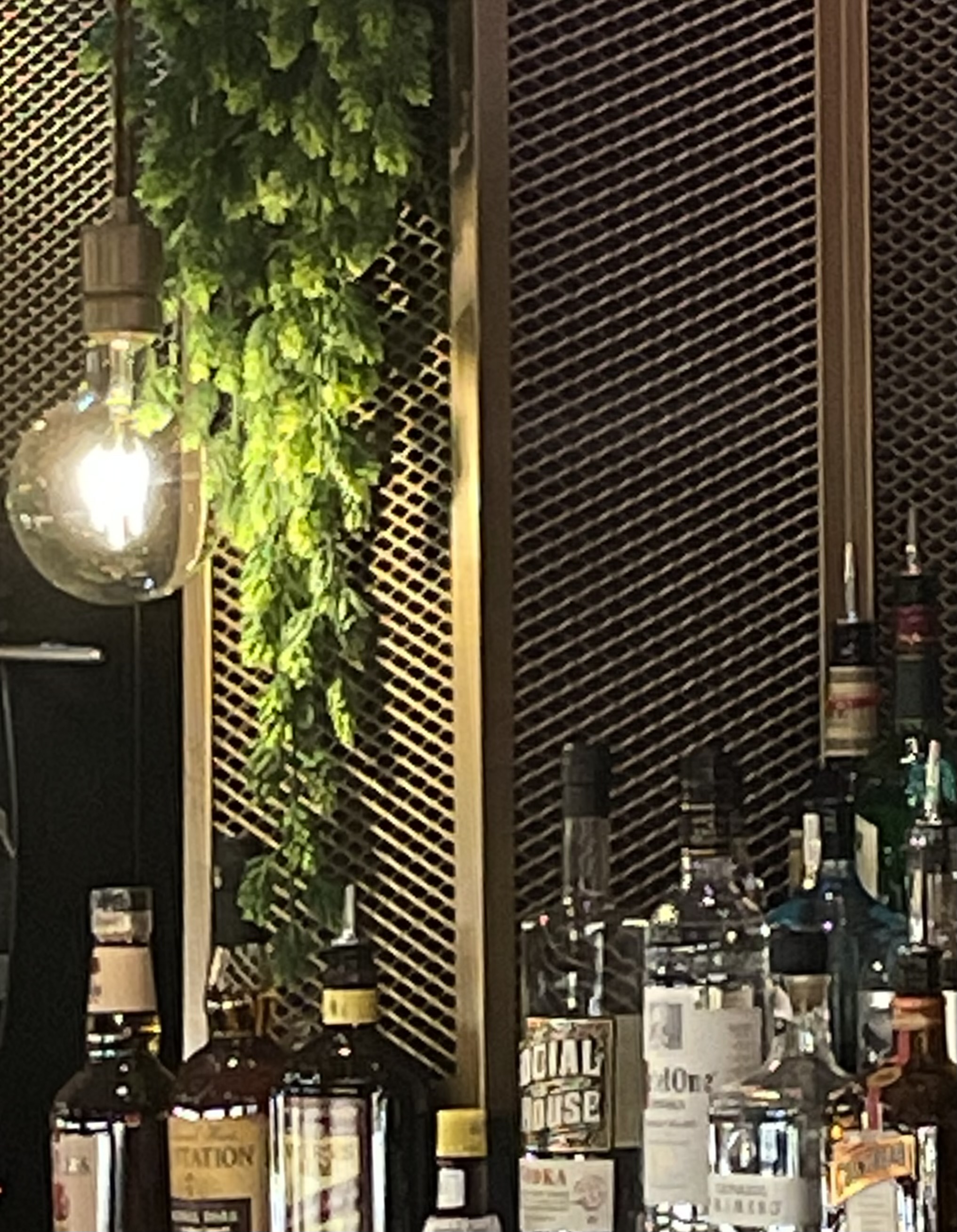
Our first evening together was in an underground bar called the Cave. We were sitting side-by-side sipping IPAs when I approached the topic of his chaotically curated instagram feed. I’ll pat myself on the back here because I went about it so slyly. I asked, “If you were going to take a small-frame photo of something behind the bar, what would it be?”

He was quiet for a minute as he scanned the contents of the back bar, every inch of which was riddled with paper clippings, caricatures, grade school block letters, and a bunch of other aesthetic junk. Eventually he settled on the rack of downturned glasses, which refracted the multi-colored cave lights in every direction. I loved that the frame he chose was something ordinary; there are always glasses behind a bar. However, most people only see glasses, they don’t notice the spectacle of reflections, and they definitely don’t consider them art. 

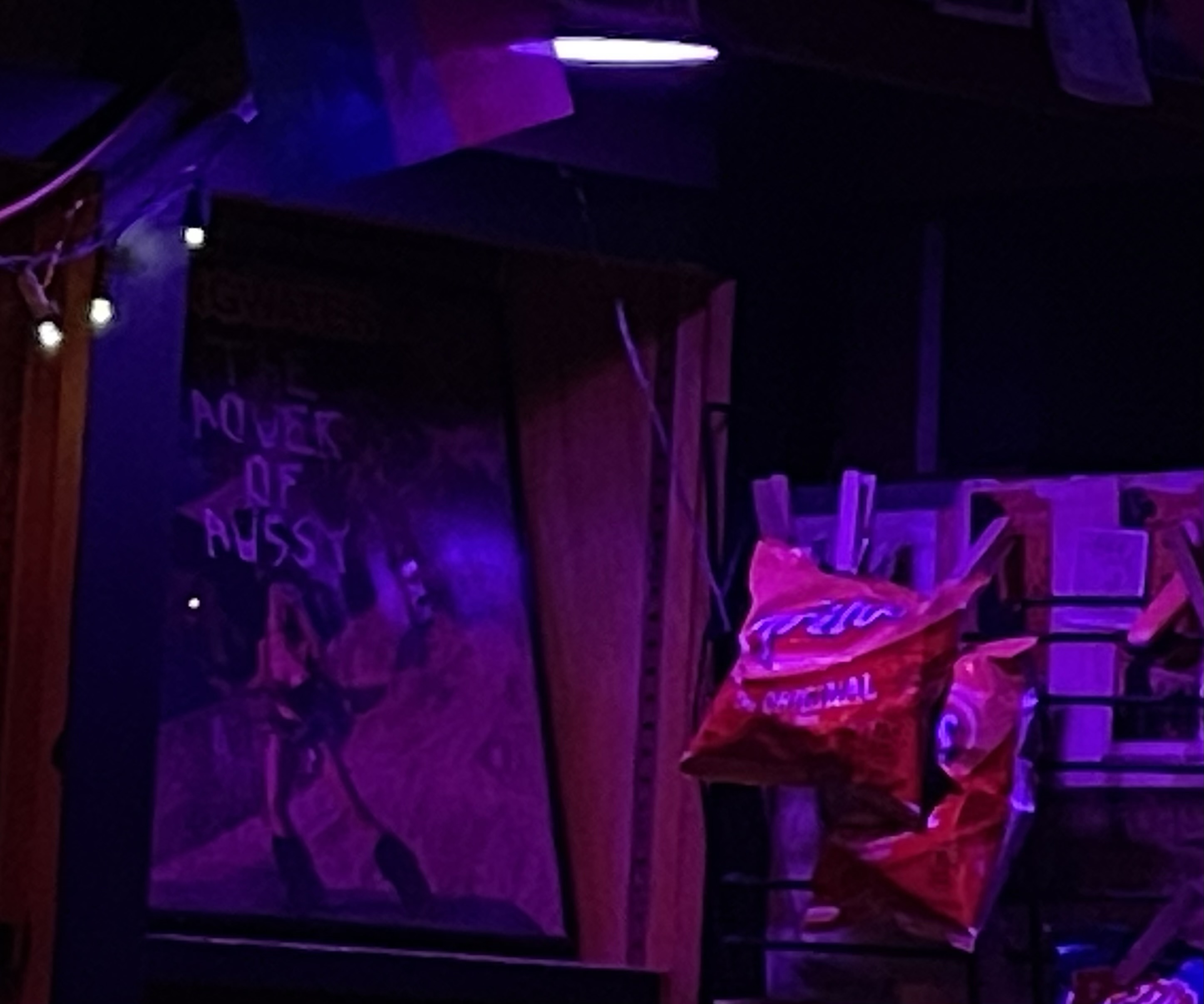
As for me, I chose a sign that was crookedly lettered “Pussy Is Power.” It sat in a pool of purple lamplight beside a rack filled exclusively with Fritos snack bags. 

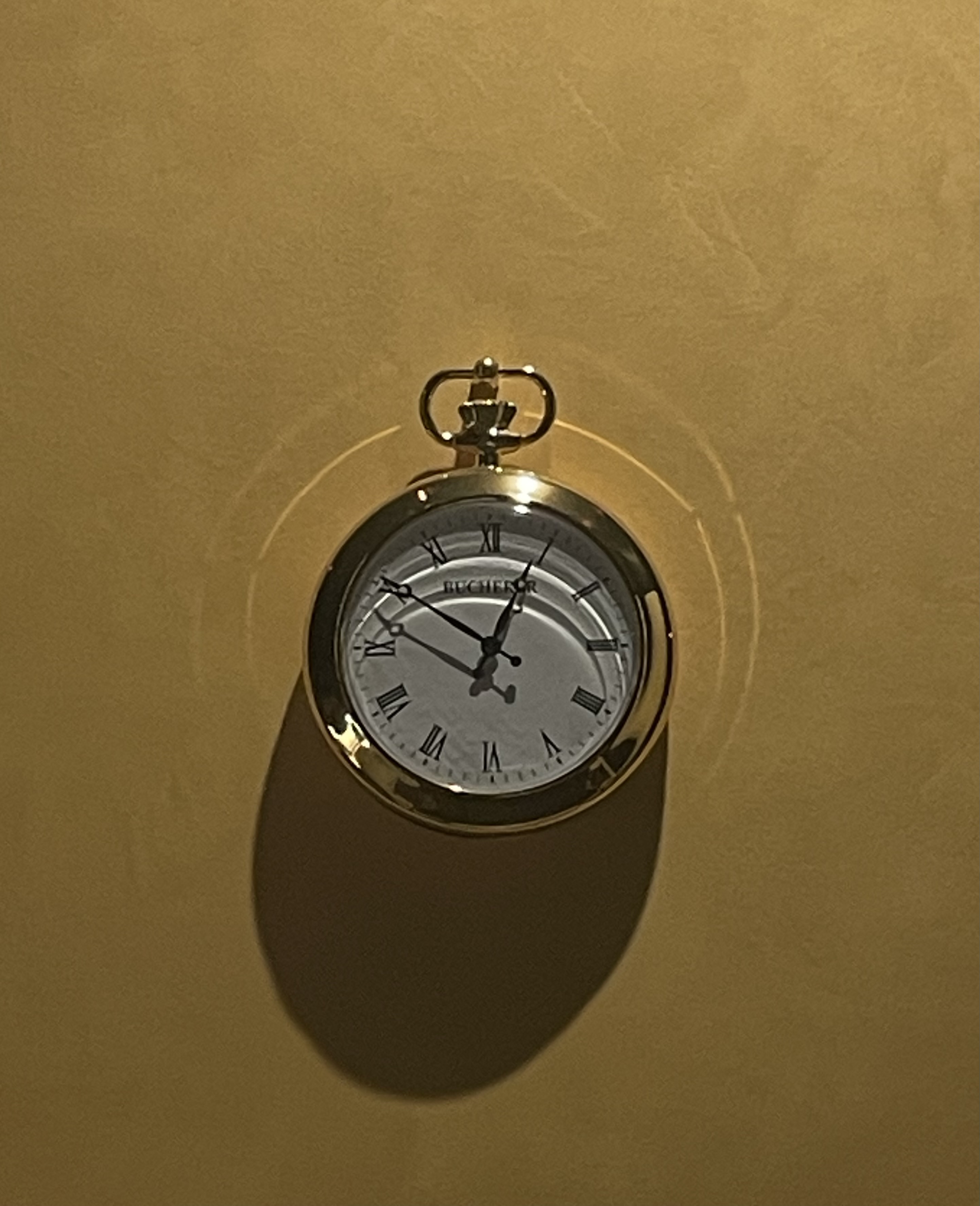
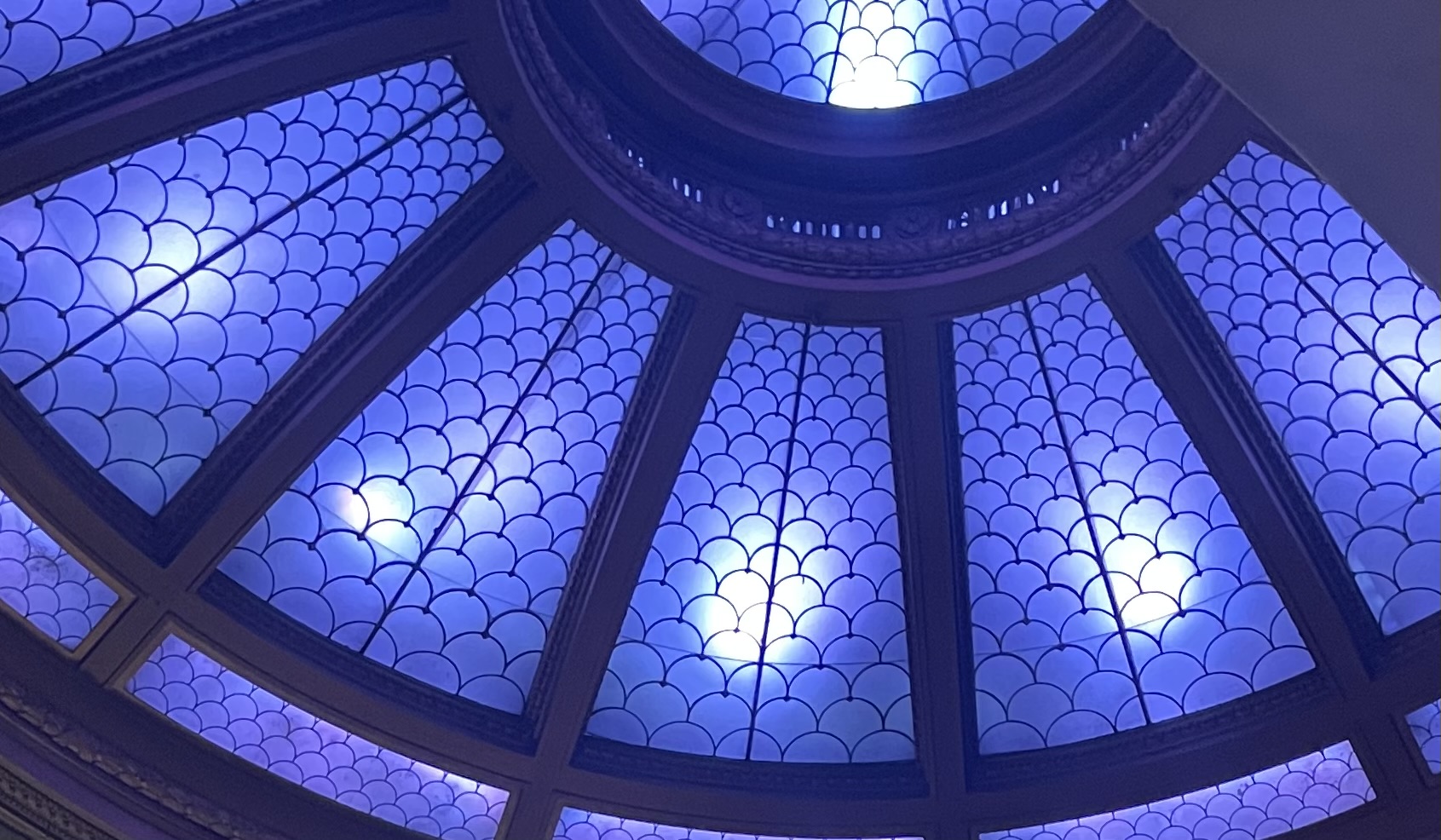
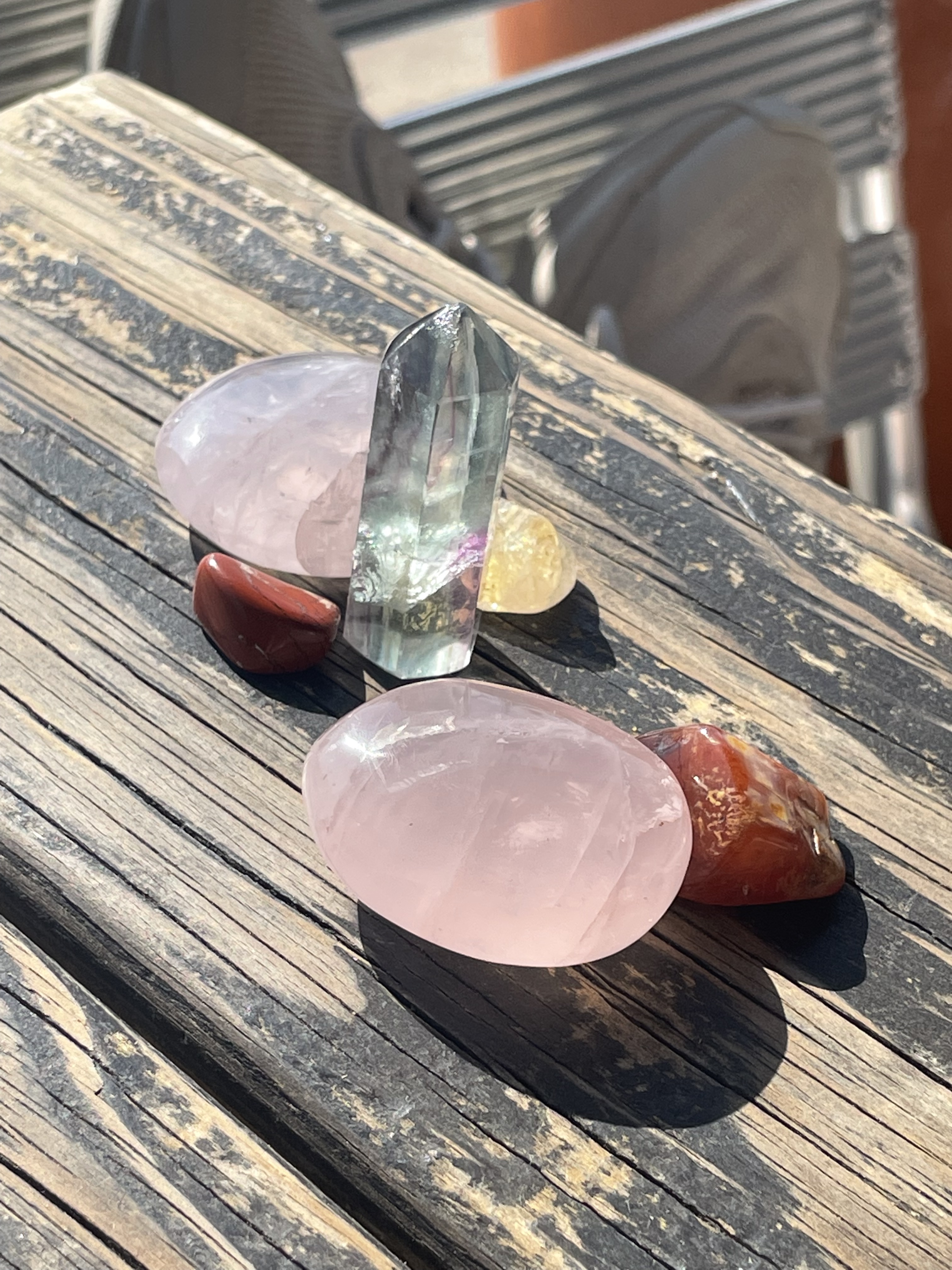
There’s so much to write about my smell-the-roses man, but I am going to fast-forward to the day he left Chapel Hill because that’s when the album was born. The idea came from the accumulation of photos we had shared back and forth of extraordinary, mundane things like clocks and countertops and ceilings. I referred to these pictures as Small Frames, and created a shared photo album so that we could continue the bit after he moved. 

Six hours apart, we cataloged our days by the beauty that existed within them. 

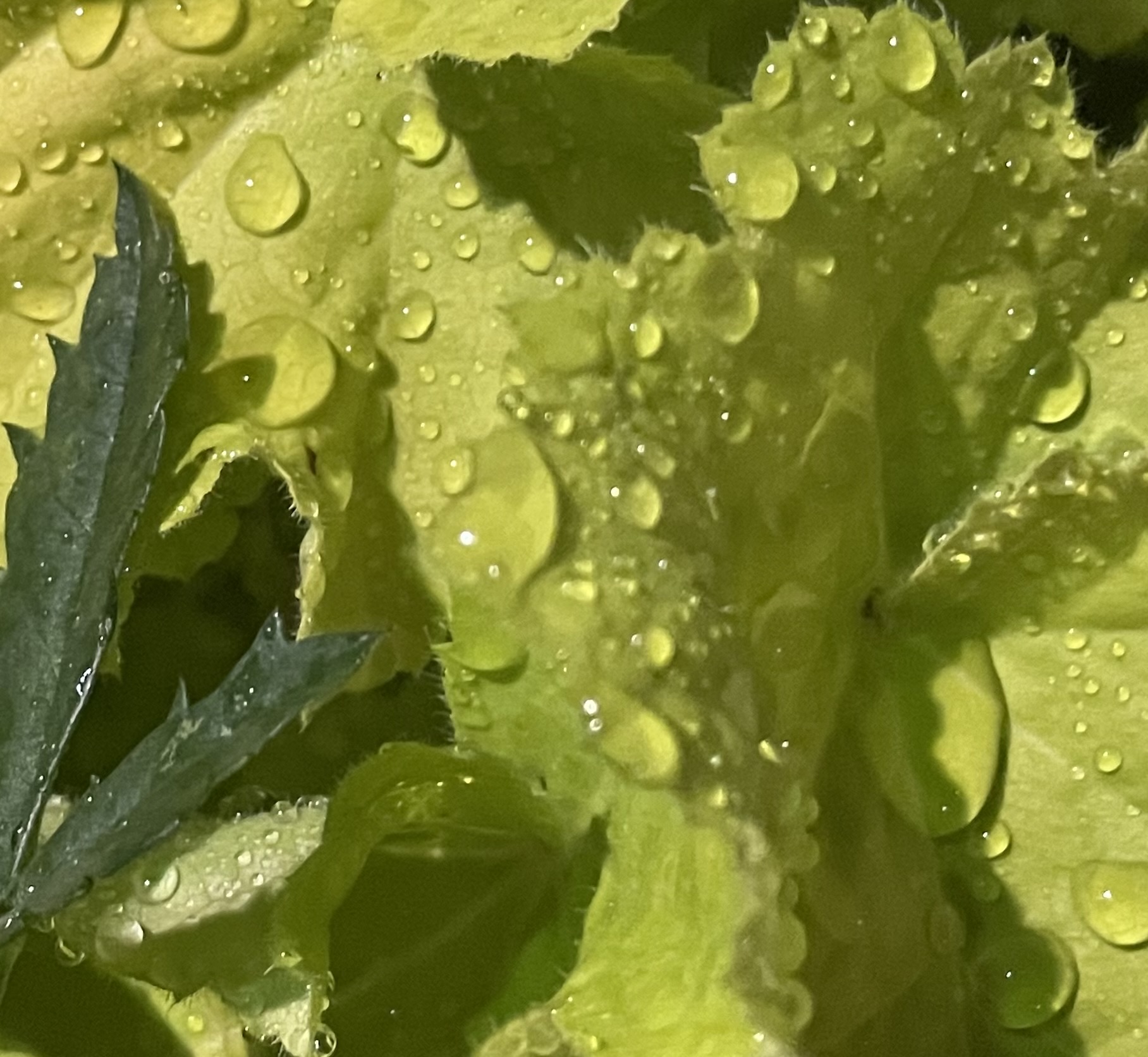
After a month or so of doing this, however, I noticed that the way I interacted with the world had changed. I slowed down. I stopped for funny road signs and dew-droplets on plants. I was excited to share those moments with someone who appreciated them as much as I did. It seemed that art was suddenly everywhere. 

In reality, there wasn’t any more or less art in the world, I had just become present enough to notice it. I was able to reclaim the childlike wonder that I’ve searched so long for by restructuring the way I processed the external world. Rather than perceiving my surroundings through a filter of lack or anxiety, the reality I had chosen to see was beautiful! My walks to work shifted from exhausting to exciting, and I found that even my human interactions had improved tenfold. One night, halfway through a conversation with one of my bar regulars, I realized that I wasn’t putting on the active listening show, I was actually actively listening

Be warned: genuinely caring about others is a side effect of living artfully. 

Without knowing it, Elijah had given me the biggest gift. I cared about something that transcended self. I felt like a kid again, excited over cloud shapes and river rocks! 

In the words of Aldous Huxley, “The secret to genius is to carry the spirit of the child into old age.” Though I’m not a philosopher, I think ol’ Huxley was on to something here. I’m convinced this is how we were intended to live. But if so, how do we push past the distraction of daily life enough to reclaim our joy? 

I suppose we start small. 

Today I woke up full of body-bees, but I had the choice to experience this day through an anxious filter or an artful one. Though I can’t always quiet the negative energy within me, I can remind myself that it’s miniscule beside the masterpiece that is life. It’s easier than you think to experience the world with a renewed sense of awe. And if you believe your everyday is art, the dark parts start to become more bearable. Soon you see the beauty in the bees. 

With love, 

Siena ❤
Potentiality & Magic

This afternoon I ran into a long-time family friend who recently graduated from theology school. She’s a true Appalachian woman – 60-something, raised on a dairy farm, no nonsense haircut that hasn’t changed since she was five –  you get the picture. Looking at her, you would never guess that her house doubles as a library, or that she just completed her Master’s and has written and published multiple books. Frankly, she’s one of the most intelligent, spiritual, and absolutely odd people I’ve ever met. 

Anyway, after we covered the conversational catch-ups (cataract surgery; colonoscopy), she told me that she’s been feeling out of sorts after graduation. The past few years of her life have orbited around school, so what happens when you take it away? All of a sudden, you find yourself floating in the void, no gravity to tether you to a purpose. 

That’s what the loss is, I think: a prescribed purpose. It’s the same flimsy concept that attracts some people to church. Like moths to a flame, it’s easy to be swept up by the instant fulfillment, distraction, and sense of identity because the personal responsibility of leading a satisfactory life is too much to individually take on. I’m not saying this is the case with my lovely friend; she’s weathered more years than I have, and seems to jump from one all-consuming interest to another. She’s also an immaculate example of questioning her own religion and finding peace with the answers she has yet to find. Our conversation was not long enough to determine the motivating factor of her late-life scholastic zeal, but what I am truthfully interested in is the aftereffects. 

How did this woman, who seemingly has such direction and drive, find herself in a parallel state to mine? I am a recent college graduate going through withdrawals. College was four years of cyclical pseudo purpose. Study hard, make good grades, work, party, repeat. 

Students are conditioned to follow the step-by-step guide that holds your hand from freshman year until graduation, no questions asked. The problem is that the guide ends there. 

What happens when the gravity of purpose goes away? 

What happens when you’re spit out into a world with nowhere everywhere to go? 

My theory is this is a more prevalent problem with creatives than, say, business majors, simply because there’s rarely a clear post-grad path for the artists. Take me, for example. My plan was to graduate, relocate (anywhere!), pick up a bartending job, and write a book in my off hours. Three months later, I don’t have enough money to uphold my moving plans, and I am living at home driving for UberEats and writing in the deadspace between pickups. I have frustrated and disappointed my best friend, who I was planning to move across the country with, and I have found myself back at the starting line over and over. 

Yes, this feels like failure. But when I voiced this to my friend, she responded, “I don’t think anyone should use the word failure. We don’t fail, we learn. Everything that happens has a great potential for your own growth.” 

I needed to hear that. I needed to recalibrate my brain, to forget the word ‘failure’ entirely. 

To focus on the positives: Not having a structured job allows me more freedom to pursue my creative interests. I can write and do art and dance! I have endless time for exploration, and I am so grateful for the space to create without bounds. At home, I can help support the people I love. And surprisingly, driving delivery has brought some zany characters into my life. Everything is inspiration. 

As the fear-response to a temporarily unstructured life turns obsolete, the world becomes your muse. You begin to consider the empty places in your life as unlimited potential. 

In The Seven Spiritual Laws of Success, Deepak Chopra introduces what he calls “The Law of Pure Potentiality.” The idea is that we all hold a vast silence inside of us, and once we recognize it, usually through meditation, we can tap into the well of creative energy. The Plane of Pure Potentiality refers to this state of being, from which all creation can burst forth. The mental image of the plane mirrors what happens when we shift our thinking away from fear; it is what happens when we accept the unfilled space and the lack of structure, and learn to see these things as blessings. 

My mother always said there’s no such thing as boredom. It is from these quiet moments that great creations are born. 

I certainly don’t have all, or even a fraction of the answers, but I’ll leave you with this challenge. If you are overwhelmed with uncertainty, anxiety, or fear about the present moment, close your eyes and Be – just Be – with yourself for thirty minutes. Don’t speak, try to filter out the pain-monologue that scrolls through your brain, dig past this until you glimpse the Plane of Pure Potentiality. Exist in communion with yourself until the fear responses in your head become a whisper; exist until you feel yourself amplified. Have patience, it always comes.

We all harbor limitless creativity, but it is our responsibility to sort through our egoic thoughts until we find the silent space within. Failure, I’ve learned, is a concept rooted in the ego. Leave it behind, recognize that it’s a choice to allow the fear of failure to consume you. Embrace the potential that is yours when you make this choice. It is here that the magic happens. 

As always, thank you for taking the time to read ❤

With love, 

Siena 

Limbo

After a four-year hiatus, I have decided to revamp the blog. It’s a decision born from creative impulse, yes, but it is also a response to the sense of destabilization that’s permeated life lately. 

When I wrote my first post, I was a nineteen-year-old college freshman with bottle-blonde hair and a bad tan. I was taking advantage of the new liberties of college life, and I had no sense of identity or self-assurance. I was in a constant limbo of trying to define myself through externalities – my boyfriend, the clothes that I wore, the words I said to strangers… I was seeking to build a self-construct from these things so I wouldn’t have to face the fact that I had no idea who I was or what I wanted. 

Four years later, I am floating in the unknown again. College was a period of personal growth and evolution in countless ways, and it’s true I am considerably more settled into myself now. However, life is nonlinear. College may have been a net positive, but it was punctuated with so many dark spaces along the way. I suppose this is the theme of the forthcoming entries: navigating a non-linear life after graduation. Navigating a world that tells you anything is possible, and the insecurity that results from this maxim. Navigating the changing relationships, both with others and self, alongside the buoyant, terrifying feeling of pitching headfirst into the future. 

A line from my old journals keeps bolting through my head. It reads: Where to go from here? It’s not a particularly poetic or individual line, but the words arrange themselves almost involuntarily in my mind. Recently, I didn’t realize how uncalibrated I’ve been feeling until this question arose. Where do I go from here? 

Half of my friends graduated college and landed in the seat of corporate U.S.A. while the other half are anxiously living on their parent’s couches. I am a member of the latter group of adult-child transplants– the creatives, the people continuing school, those whose aspirations are too lofty to narrow down, the list goes on. I’m sure it’s easy to envision us playing video games, stuffing our cheeks with cheeseballs and twiddling our thumbs (on our parents’ dime of course), but I promise we don’t want to be here any more than our parents want us here. 

Three months ago, I fell victim to the beautiful delusion that if I graduated from UNC with a good GPA, etc, then the perfect job would fall into my lap. I was comfortable with this if/then situation until I actually began the job search. It wasn’t until I was handing out resumes that I was forced to face my own uncertainty. The problem was that the ‘next step’ had always been prescribed. I had always acquired it with ease. All the moving parts of major life decisions seemed in place to serve me, and I had coasted from high school to college with minimal friction. Though I have never considered myself a passive person, I realize that the trepidation after graduation was born from the realization that in order to move forward, I needed to become a much more active participant in my own life. 

It’s hard to be gifted agency after ease. 

Don’t get me wrong, though. I am not complaining; I am so grateful. It was an issue of restructuring my mental reaction, of reminding myself that this caliber of freedom comes with personal responsibility. What happens in my life is ultimately a product of my decisions. If my reality is a reflection of how I perceive and interact with the world, it is my responsibility to exist in love and positivity rather than fear. The former is far more productive, while the latter trends towards destruction. Of course, the paradox is that life smacks you with the unexpected, and this is the only true constant it gives you. I suspect there’s a balance between agency and going with the flow (another phrase that cycles through my brain: Vonnegut’s ‘so it goes’), and sometimes I wonder if they’re really so different. It’s a choice to have faith in the process, isn’t it?

So here I am. Lost, confused, feeling a bit unraveled, but also confident, excited, inspired. It is a daily choice to wake up and pursue that which nourishes my soul, and I am abundantly grateful to have the space to do so. I’ve learned that limbo isn’t the worst state of being if you meet it with presence. A moment is not defined by its position in relation to other moments, thus presence is simply the act of becoming comfortable in the ever-changing now. And once you find presence, the peace that comes with it dissolves the entire concept of limbo. 

I guess what I’m saying is that limbo isn’t such a bad thing. It’s not even a real thing. Sure, I might not be making six figures or climbing the corporate ladder, but what feels like failure right now is only creating space for better things to come. I get to wake up in the morning and write. When I go to work bartending, I get to listen to the crazy stories people carry with them. I get to spend more time with my family as I figure out next steps. Changing the narrative from ‘I have to’ to ‘I get to’ reminds me to savor the present moment rather than worry about what is to come. 

And, presently, I am remembering how much I hate conclusions. I could say I get to hate conclusions, but I haven’t reached that level of maturity yet. So, since this is my blog and all, I’m not going to leave you with some long winded synthesis of my word-regurgitation. Instead I’ll leave you with these sentences. Read them with your hands in the air!

Let’s embrace this in-between! 

Let’s meet the present moment with joyful inertia, passion, and open-mindedness! 

Let’s learn to love and have patience with ourselves in every state of being! 

I hope you get to experience so much beauty today. 

With Love,

Siena  

One Thing.

Last year, one of my friends asked me in a letter: “why do you write?” And out of all the questions which he asked — about my deepest fears and insecurities and whatnot — it was this question which struck the hardest. Growing up, I spilled words [in crooked handwriting, all loops and heart-bubbled ‘i’s] onto notebook pages because I did not want to be forgotten. Strangely, and in contradiction to all your preconceptions about elementary school — this was what motivated me during the primitive days of my writing. 

A little condition called early onset existential crisis. 

Imagine: fourth grade me, an expanse of life ahead, preoccupied by impending death and a great unknown afterwards. I would watch people speak beautiful, poetic things, and the words would drift from their lips, dissolving into the atmosphere. Nothing I said would linger in the air the way I wanted it to. It was because of this that, under the illusion that ink was permanent and would far succeed me in years, I picked up a pen. 

The question continues to push itself into my mind, long after my friend asked it. A year ago, this was my response: 

Escape. 

When I am in corners, I write about walls and bare feet. 

When I am lying, I write about love. 

When I am alive, I write about wide open skies. 

When I am healing, I write about canyons and stitches and bare forearms. 

When I am stuck, I write about rain and wildflowers. 

When I am sad, I write about champagne or window panes. 

Anything and everything, to continue moving forward. 

For the longest time, I was obsessed with growth. After struggling with mental illness (or, as I referred to it in my youth: the monsters in my brain), the thought of moving backwards was frightening. I would do anything to avoid it, to continue living happily and recklessly, making up for the years I felt I had lost. It was a long time before I realized that even more than making a mark on the world, escape had always been the motive. 

When I was young, I wanted assurance that some part of me would remain on the earth after my body. The plan was to escape the grand imminence of life and its end. When I was older, I scrawled my sickness across the pages — my notebooks were pleas, repeated a million times, for a relief from the pain. It was years later when a hesitant sort of healing settled in, accompanied by the increasingly vast insecurity that I would fall back into the scarier places of years before. 

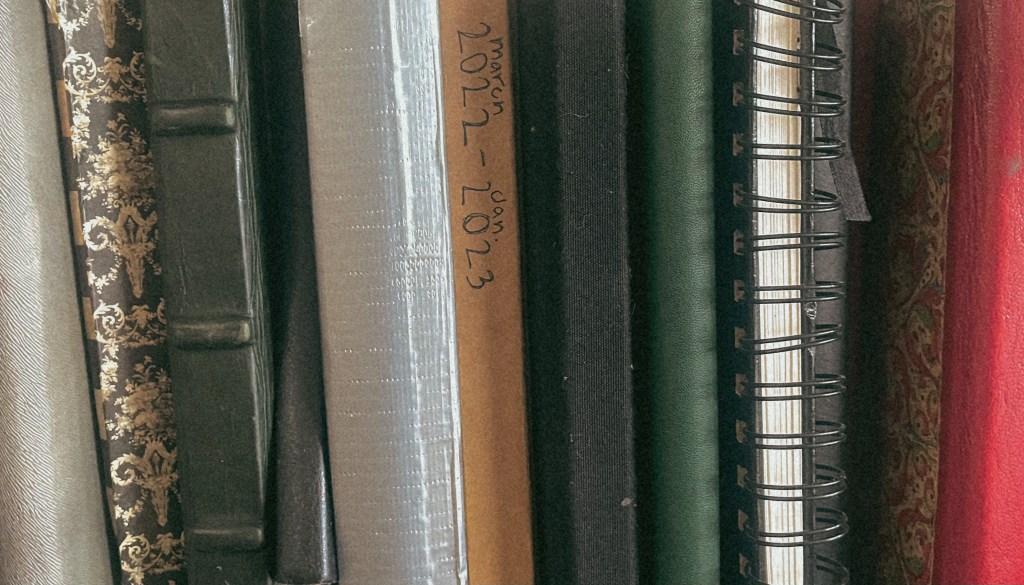
And now? I suppose I write because I have something to say. The journals stacked against my shelves are raw. They are real. They are stained with tears and anger and joy intermingled. So here I am, existing in an increasingly filtered world, attempting something organic. 

I should let you know — it scares the absolute hell out of me. 

My mom used to have a magnet on the fridge that read: “Do one thing every day that scares you.” I think about it a lot, how daunting of a command it is. Yes, it’s just one thing. But every day? How am I supposed to slip past my comfort zone so regularly?

Well, here I am. And this is my one thing, today.

All the love,

Siena Maria